Introduction
Tablet friability testing is an essential quality control procedure used to evaluate the ability of compressed tablets to withstand the mechanical stresses encountered during manufacturing, packaging, transportation, and routine handling. While tablets must disintegrate appropriately after administration, they must also possess sufficient mechanical integrity to resist chipping, abrasion, and breakage before reaching the patient. Excessive friability can lead to damaged products, inaccurate dosing, poor appearance, increased dust generation, and customer complaints. USP General Chapter <1216>, Tablet Friability, establishes standardized equipment and test procedures that enable manufacturers to assess the durability of uncoated compressed tablets and maintain consistent product quality.
Why Friability Matters
Throughout the pharmaceutical manufacturing process, tablets are subjected to repeated mechanical impacts. They move through tablet presses, dedusters, metal detectors, coating equipment, packaging lines, and shipping containers before finally reaching pharmacies and patients. During each of these stages, tablets experience collisions with equipment surfaces and with one another.
A tablet that lacks sufficient mechanical strength may chip, crack, or generate excessive dust. These defects not only reduce product appearance but may also alter tablet weight, compromise dosage accuracy, and affect regulatory compliance. Friability testing provides manufacturers with an objective method for evaluating a tablet’s resistance to surface wear and mechanical abrasion before commercial distribution.
Principle of the Test
USP <1216> measures friability by determining the percentage of weight loss that occurs after tablets are tumbled under controlled conditions. The test utilizes a transparent rotating drum fitted with a curved internal baffle. As the drum rotates, tablets repeatedly roll, slide, and fall against the drum wall and against each other, simulating the stresses encountered during routine handling.
Before testing, tablets are carefully dedusted and accurately weighed. Depending on tablet weight, either a sample totaling approximately 6.5 grams or 10 whole tablets is used. The drum rotates 100 revolutions at 25 ± 1 rpm, after which the tablets are removed, dedusted again, and reweighed. The percentage weight loss represents the tablet’s friability.
Acceptance Criteria
For most conventional compressed tablets, a maximum mean weight loss of 1.0% is considered acceptable. In addition to weight loss, the presence of cracked, cleaved, or broken tablets after testing generally constitutes a failure. If results are borderline or difficult to interpret, USP recommends repeating the test twice and calculating the mean of three determinations.
Certain dosage forms, including effervescent, chewable, or highly hygroscopic tablets, may require modified acceptance criteria or testing under controlled humidity conditions because of their unique physical properties.
Factors Affecting Friability
Numerous formulation and manufacturing variables influence tablet friability. Compression force, binder type and concentration, granule characteristics, lubricant levels, moisture content, and tablet geometry all contribute to mechanical durability. Process variables such as tooling wear and compression speed can also affect tablet strength.
Because friability is sensitive to these variables, it is routinely monitored during formulation development, process optimization, scale-up, validation, and commercial production. Trending friability data over time enables manufacturers to identify process shifts before product quality is compromised.
Modern Testing Equipment
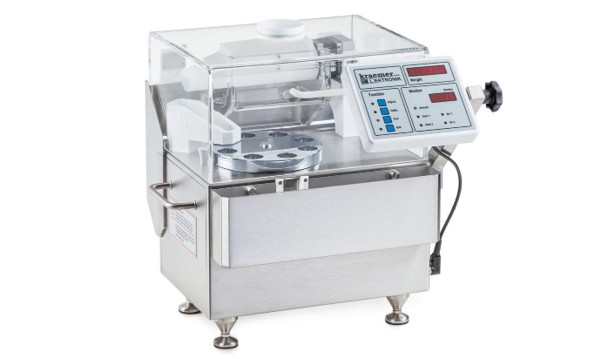
Today’s friability testers provide highly repeatable operating conditions through electronically controlled rotation speed and test duration. Multi-drum instruments allow several samples to be tested simultaneously, increasing laboratory productivity while maintaining compliance with USP <1216>. Automated timing and programmable test cycles reduce operator variability and improve consistency between laboratories.
Routine calibration and preventive maintenance of friability testers are equally important to ensure that drum dimensions, rotational speed, and operating conditions remain within pharmacopeial specifications.
Conclusion
Tablet friability testing is a simple yet indispensable quality control tool that verifies the mechanical durability of compressed tablets before they enter the marketplace. By measuring resistance to abrasion and handling stresses, the test helps manufacturers produce tablets that retain their appearance, weight, and physical integrity throughout distribution and normal use. When performed using validated equipment in accordance with USP General Chapter <1216>, friability testing provides confidence that pharmaceutical products will withstand the rigors of manufacturing and delivery while maintaining the high quality standards expected by regulators, healthcare providers, and patients