Introduction
Tablet breaking force testing is one of the most important physical quality control tests performed during the development and manufacture of solid oral dosage forms. The test measures the force required to fracture a tablet under controlled conditions, providing an indication of its mechanical strength and ability to withstand the stresses encountered during manufacturing, packaging, shipping, and routine handling. USP General Chapter <1217>, Tablet Breaking Force, establishes guidance for measuring breaking force using standardized equipment and testing procedures. While breaking force alone does not predict tablet performance after administration, it is an essential quality attribute that complements other tests such as friability, disintegration, and dissolution.
The Purpose of Breaking Force Testing
Compressed tablets must possess sufficient strength to survive the rigors of production and distribution while still allowing rapid and consistent drug release after administration. Tablets that are too weak may crack or break during packaging and transportation, resulting in product loss and customer complaints. Conversely, tablets that are excessively strong may exhibit prolonged disintegration or dissolution characteristics if the formulation is not properly optimized.
Breaking force testing provides manufacturers with a rapid, reproducible method for monitoring tablet compression consistency during formulation development, process validation, and routine production. As a result, it has become one of the primary in-process quality control tests performed in pharmaceutical manufacturing.
Understanding Breaking Force
USP <1217> defines breaking force as the amount of force required to cause a tablet to fracture in a specified plane. Historically, this measurement has often been referred to as “tablet hardness” or “crushing strength.” However, the chapter explains that these terms are technically inaccurate. In materials science, hardness describes a material’s resistance to surface indentation rather than fracture, while crushing strength implies complete crushing of the tablet. Therefore, the preferred terminology is breaking force, which more accurately describes the test being performed.
Test Equipment and Measurement
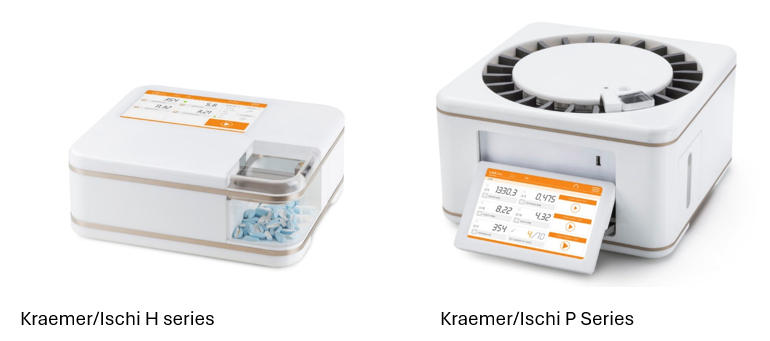
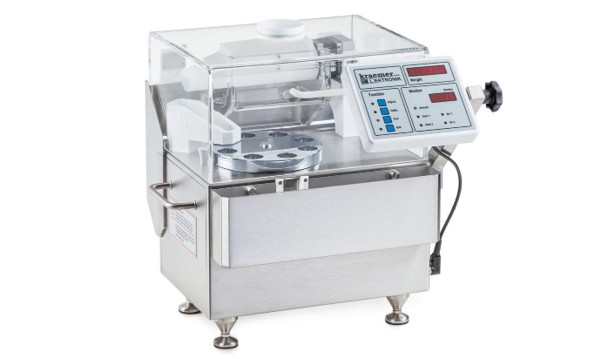
Modern tablet breaking force testers employ precision mechanical drives, strain gauge load cells, and electronic signal processing to produce accurate and highly repeatable measurements. During testing, the tablet is positioned between two parallel platens. One platen moves at a controlled rate, applying an increasing compressive load until the tablet fractures. The maximum force recorded immediately before fracture is reported as the tablet’s breaking force.
USP <1217> emphasizes that the platens should be precision-ground, parallel, and free from mechanical distortion during loading. Equally important is maintaining a controlled and consistent loading rate, since variations in force application can influence the measured breaking force and reduce test reproducibility. Modern electronic testers largely eliminate the operator variability associated with earlier manually operated instruments.
Factors Influencing Breaking Force
Numerous formulation and manufacturing variables affect tablet breaking force. Compression force applied during tablet production is often the most significant factor, but particle size distribution, granule density, binder concentration, lubricant levels, moisture content, and tablet geometry also contribute to the final mechanical strength.
Monitoring breaking force allows manufacturers to identify changes in raw materials or processing conditions before product quality is affected. Statistical trending of breaking force data is commonly used during process validation and routine production to demonstrate process consistency and maintain regulatory compliance.
Relationship to Other Quality Tests
Although breaking force is an important indicator of mechanical integrity, it should not be evaluated in isolation. A tablet with an acceptable breaking force may still fail friability, disintegration, or dissolution testing if formulation variables are not properly balanced. For this reason, breaking force testing is typically performed alongside other pharmacopeial tests to provide a comprehensive assessment of tablet quality.
Together, these complementary tests ensure that tablets are both durable enough to survive distribution and capable of delivering the intended therapeutic performance after administration.
Conclusion
Tablet breaking force testing is a critical component of pharmaceutical quality control, providing valuable information about the mechanical integrity and manufacturing consistency of compressed tablets. By using properly calibrated electronic testing equipment and following the recommendations of USP General Chapter <1217>, manufacturers can obtain accurate, reproducible measurements that support formulation development, process validation, and routine production. When combined with friability, disintegration, and dissolution testing, breaking force measurement helps ensure that every tablet delivered to the patient meets the highest standards of quality, safety, and performance.